Resources · Site Prep
Your Build Starts Before the First Truck Shows Up
How to prepare your building site so deliveries, crews, and your whole build go easier.
A lot of projects start the same way. Someone picks a spot and says, "I want to build here." The plans get drawn, the materials get ordered, and the build date gets set. But nobody stops to ask how the trucks, the materials, and the crews are going to get in.
I run logistics at NHC Components. Our drivers deliver trusses and laminated columns to job sites in the Midwest, so we see a lot of sites on delivery day. Some building sites are well laid out. Others are so tight it's hard to get the material through the driveway, because of steep grades, trees, existing buildings, or a driveway that never got a solid base.
Whatever the reason, the fix is simple: start with the end in mind. Before the first load shows up, think through everything that has to get onto that site and how it's going to get there.
Before you build
- Talk through the project with your contractor
- Do your site work while it's dry
- Build the driveway in layers
Before delivery day
- Check that your gate is wide enough
- Leave room for the truck to turn around
- Clear a flat, firm spot for the materials
Know what's coming
If you're a homeowner, your first step should be to connect with a contractor and get their advice on everything. We cover that in our first Truss Tips article, Most People Start Their House Backwards.
Talk to the contractor about:
- What this project is going to involve
- When materials are going to show up
- Where those materials will go
- How the different stages of the project are going to work together
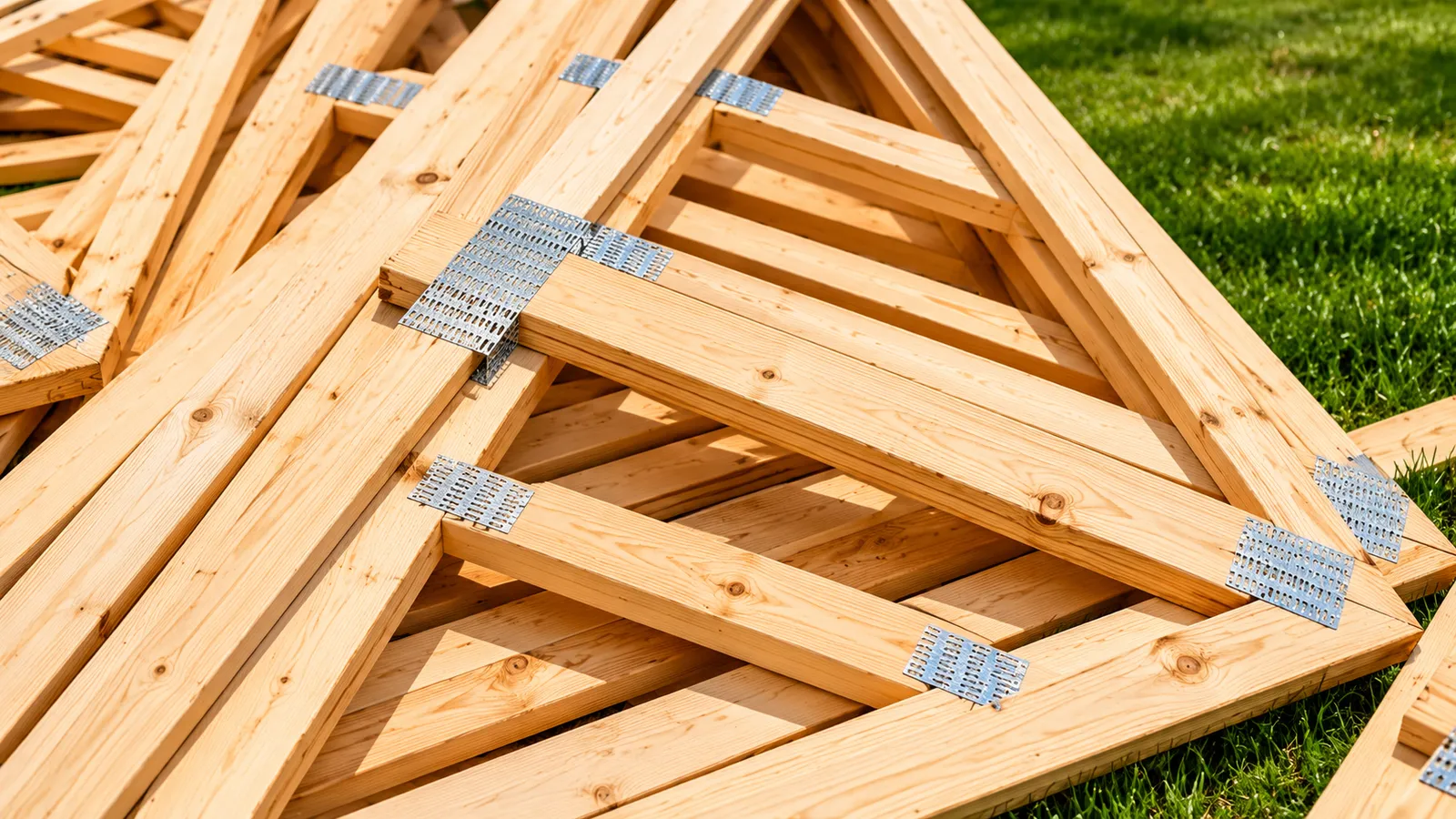
On our end, we usually deliver the biggest loads to any job site, so we are particularly aware of these questions. Trusses are big, and they don't bend to fit your gate.
Say you want to put up a 60 x 120 pole barn. The trusses for that building are very likely going to be 10-1/2 to 12 feet wide on the truck. If the gate into your field is 10 and a half feet wide, the load isn't getting through.

That's not a problem if you know ahead of time. Widen the gate, take a fence panel out, or plan a different way in. Then tell your contractor and your supplier so everyone is on the same page. The problem is finding out when the truck is already sitting at the road.
Do your site work while it's dry
Timing matters. If you're building in a wet season or over the winter, say January, February, or even March, get your site ready in the fall while the ground is dry. Then the build goes a lot easier, with way less headache.
If you wait until the ground is already wet to put in the site, you'll have a mess, and you'll have to rework the site when things dry out.

Keep it flat and solid around the building
The ground around the building matters too. If there are hills right up close to the building, or the ground is flat but soft, equipment can get stuck or damaged, and other things can go wrong.
Some vendors, like concrete trucks, will bill you if they get stuck or something goes wrong on your site.

It can also cost you. General contractors and subcontractors may charge more for a site that's hard to get into or work on. A truck that gets stuck, a crew that loses half a day, or a load that has to come back another day all add up. We have also seen a bad site delay jobs for way longer than necessary if things were not done correctly.
If your project needs heavy trucks, think this through ahead of time. Go cheap here, add any bad weather at all, and you'll have delays.
Don't skimp on the driveway
On a new build, the driveway is one of the easiest places to try to save money. It's also one of the worst.
If the drive isn't built up with a good base, it turns to mud the first time it rains. Every truck, every crew, and every piece of equipment has to fight its way in and out. That makes the job dirty and miserable for everyone working on it, and it slows the work down.
Here's the part people miss: you need a finished driveway anyway. If you do it right the first time, it rarely costs you more. If you skimp on it, the best case is that it costs about the same. The worst case is that you pay to redo it.
Build it in layers
How you put the driveway in matters as much as whether you put one in. We see two common mistakes:
- Only big stone. Trucks can't get traction.
- Only small stone. Mud comes up through the stone, and the driveway turns into a mess. Once the build is done, you'll have to redo it anyway.
Here's what has worked best for us:
- 1. Base
- Lay a solid base of No. 2 or No. 4 stone first.
- 2. Top
- Top it with 304, 411, or both. If that's done right, trucks should be able to get in and out without much trouble.
- 3. Finish
- When the project is finished, grade the top. If no big stone is coming through, it may only need grading and a top layer of 57s. If big stone is working its way up, cover it with more 411, then finish it with No. 57s.

Gravel names can vary from state to state, and every site is different. Talk to your local excavator or contractor before you go with this. They know your ground and what holds up where you live.
Make sure everyone can get in and out
Getting in is only half of it. The truck has to get back out too.
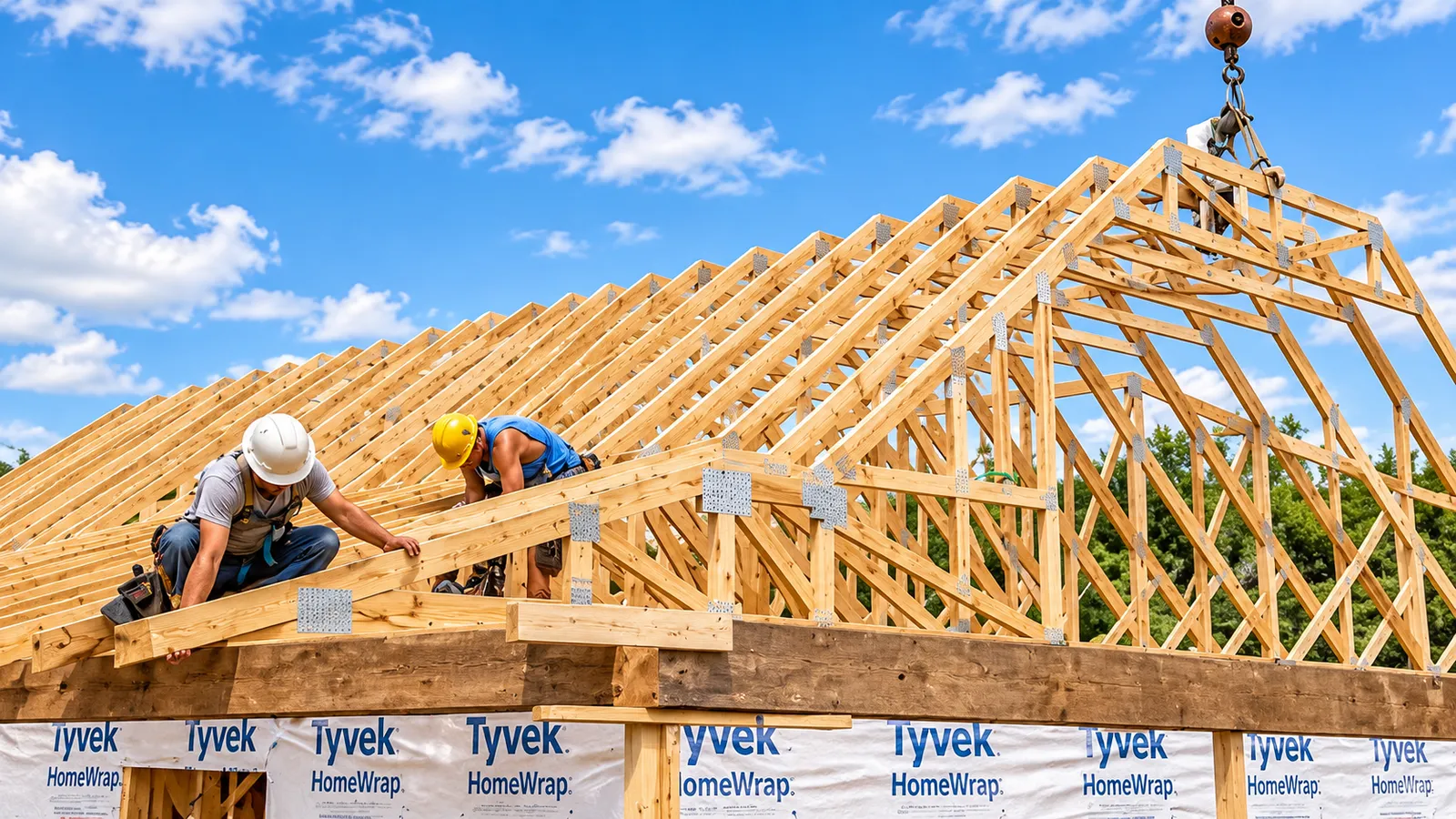
There have been times we couldn't get into a job site and had to wait to deliver the trusses. When that happens, the framing crew waits. The schedule slides. Everyone behind them gets pushed back. If you want your project done fast, a site that's easy to get into is one of the best things you can do for it.

A few more things to check before delivery day:
- Room to turn around
- A long truck and trailer need a lot of space. If there's no room to turn, the driver may have to back out a long way, or may not be able to get in at all.
- Overhead wires and trees
- Look up. Low power lines, phone lines, and tree branches can block a tall load or the equipment unloading it.
- A flat, firm spot
- Trusses need to be set down on level, solid ground, close to where they'll go up. Soft or uneven ground makes unloading harder and can damage the trusses.
- Clear access
- Move vehicles, equipment, and piles of material out of the path before the truck arrives.

Where to start
Before you break ground, walk your site with the end in mind. Think about every truck and every crew that will need to get in and out. Check your gate, do your site work while it's dry, build the driveway in layers, and keep the ground around the building flat and solid.
If you're not sure what your loads will look like, ask. Your contractor or lumberyard dealer can help you plan, and they can get answers from us. If you don't have a dealer yet, you can find one near you with our Dealer Locator.
A little planning up front saves a lot of waiting, mud, and extra cost later.